
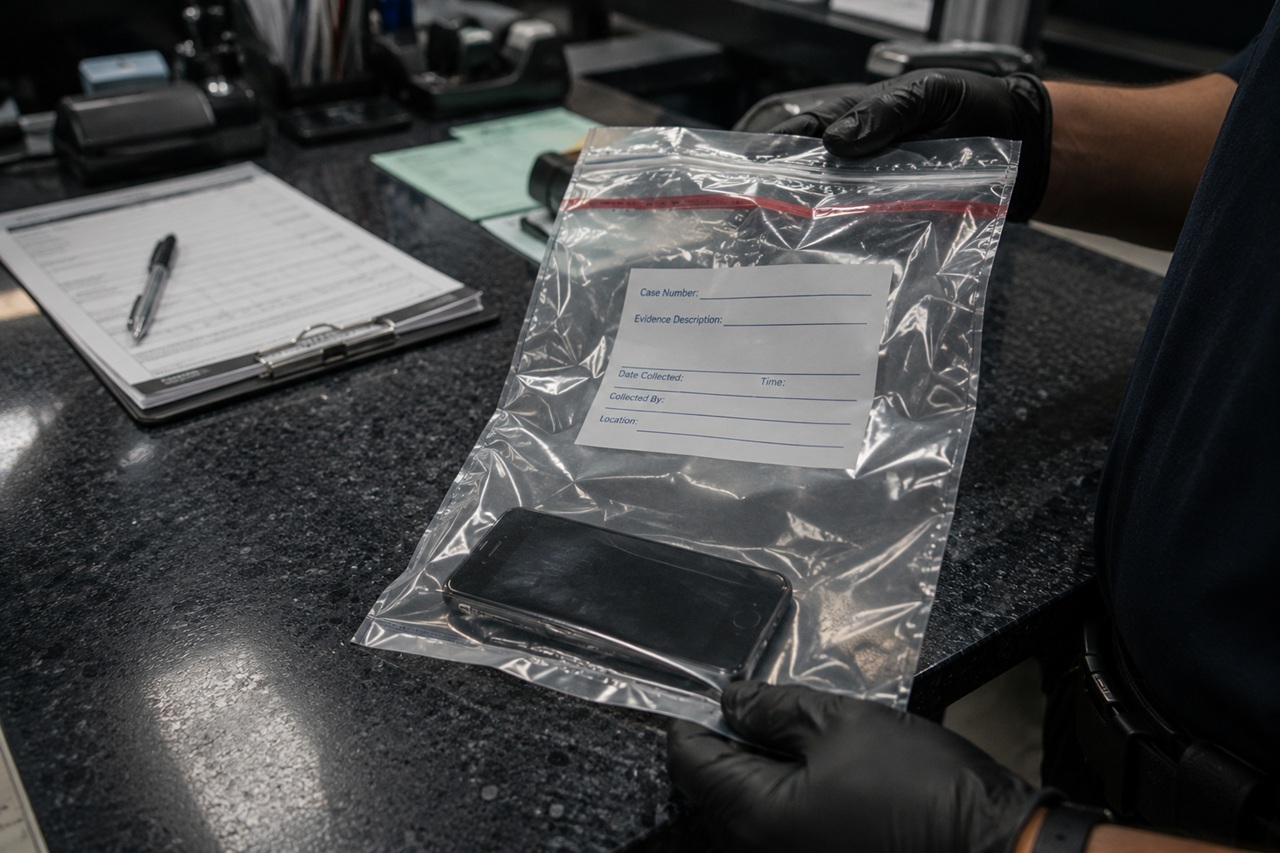
Police Generally Need A Warrant To Search Your Phone After An Arrest
The moment someone gets arrested in Texas, the phone in their pocket can become one of the most important pieces of evidence in the case. Law enforcement wants access to it, and many people in custody do not realize they have the right to say no.
In 2014, the United States Supreme Court ruled unanimously in Riley v. California that police generally cannot search a cell phone without a warrant, even after a lawful arrest. The Court recognized that a modern smartphone is far more than a communication device. It contains years of personal information, private conversations, financial records, photographs, location history, internet activity, and other deeply personal data. The Fourth Amendment protects that information accordingly.
That ruling applies in Texas just as it does throughout the rest of the country. However, understanding the rule and understanding how officers attempt to apply exceptions in real-world arrests are two very different things.
What The Law Says And Why Phone Search Cases Still Create Legal Battles
An Austin criminal defense attorney will tell you that Riley was a landmark decision, but it did not eliminate phone searches entirely. Instead, it established that a warrant is generally required before officers can access the contents of a cellphone.
That means police must typically go before a judge, establish probable cause, and obtain authorization before searching the device. In practice, however, officers do not always wait. When someone does not realize they can refuse consent, or when law enforcement argues that an emergency exists, disputes often arise over whether a search was lawful.
Those disputes can become critical because digital evidence frequently plays a major role in modern criminal prosecutions.
When Texas Police May Be Allowed To Search A Phone
The warrant requirement is the general rule, but several exceptions may allow law enforcement to access a device under certain circumstances. These exceptions are often heavily litigated because they determine whether evidence can ultimately be used in court.
- A Valid Search Warrant: If police obtain a warrant specifically authorizing a search of the phone, the search is generally lawful. The warrant must identify what officers are permitted to search and cannot automatically provide unlimited access to every application, file, or account on the device.
- Voluntary Consent: If a person voluntarily agrees to a search, officers may not need a warrant. Courts often examine whether the consent was truly voluntary or whether it resulted from pressure, intimidation, or confusion about a person's rights.
- Exigent Circumstances: Courts have recognized narrow emergency situations where officers may act without first obtaining a warrant. Examples can include immediate threats to public safety or situations where officers reasonably believe evidence is actively being destroyed.
- Plain View Observations: If officers lawfully possess a phone and incriminating information is immediately visible without conducting a search, that observation may be admissible. This exception does not permit officers to scroll through messages, photographs, or applications looking for evidence.
A defense attorney who understands how these exceptions are applied can carefully examine whether officers stayed within constitutional limits or exceeded them.
What Happens When Police Search A Phone Illegally?
When law enforcement searches a cellphone without a warrant and without a valid exception, the evidence does not automatically disappear. However, it may be excluded from the case.
The exclusionary rule prevents prosecutors from using evidence obtained through unconstitutional searches and seizures. A criminal defense lawyer can file a motion to suppress and ask the court to exclude the improperly obtained evidence.
If the court grants the motion, prosecutors may lose access to some of the most important evidence supporting their case.
For example, if a drug distribution charge relies heavily on text messages recovered from an unlawfully searched phone, suppressing those messages could significantly weaken the prosecution's position. In some situations, it may affect whether the case can move forward at all.
What To Do If Police Ask To Search Your Phone
The period immediately following an arrest is often confusing and stressful. Unfortunately, it is also when people are most likely to unintentionally give up important constitutional protections.
If officers ask to search your phone, several basic principles can help protect your rights:
- Clearly Decline Consent: You have the right to refuse a warrantless search. Saying, "I do not consent to a search of my phone," is not obstruction. It is the exercise of a constitutional right.
- Do Not Provide False Information: Refusing consent is legal. Providing false information to law enforcement is not only illegal but can also create additional legal problems.
- Request An Attorney: If you are being questioned, ask to speak with a lawyer before answering questions. Once you request counsel, continue exercising your right to remain silent.
The decisions made during the first few minutes after an arrest can have consequences long after the arrest itself.
Digital Evidence Plays A Growing Role In Texas Criminal Cases
Cellphones often contain information that prosecutors view as valuable evidence. Text messages, emails, photographs, internet searches, social media activity, banking records, location data, and application histories can all become part of a criminal investigation.
Because of that, phone search issues frequently arise in cases involving:
- Drug charges
- Assault allegations
- Domestic violence cases
- White-collar crimes
- Internet-related offenses
- Weapons charges
- Conspiracy allegations
When digital evidence becomes part of a prosecution, the legality of how that evidence was obtained can become just as important as the evidence itself.
Protecting Your Rights After A Texas Arrest
If police searched your phone after an arrest, or if you are concerned about a pending investigation involving digital evidence, it is important to have an experienced defense attorney review what happened.
At Botsford & Roark, we have spent decades defending people facing serious criminal charges throughout Austin and Central Texas. Attorney Brian Roark works aggressively to challenge unlawful searches, protect constitutional rights, and fight to keep improperly obtained evidence out of court.
If you were arrested and believe law enforcement searched your phone without proper legal authority, contact us today for a free and confidential case evaluation. A member of our team is available 24 hours a day to discuss your situation and explain your options.